
CI/CD & Regression Test Automation
GitHub Actions pipelines with API and UI regression tests, promoting one Docker image to every stage.
- Role
- Full-stack engineer · CI/CD and test automation
- Core stack
- GitHub ActionsDockerNode.jsDjangoReact
Overview
Brought automated testing and continuous delivery to retail client applications: every pull request runs API integration and frontend regression tests, and releases ship as Docker images through GitHub Actions.
Releases relied on manual testing and hand-configured servers, so regressions in checkout and payments surfaced late and deployments were slow and inconsistent.
Product walkthrough
The flow, screen by screen
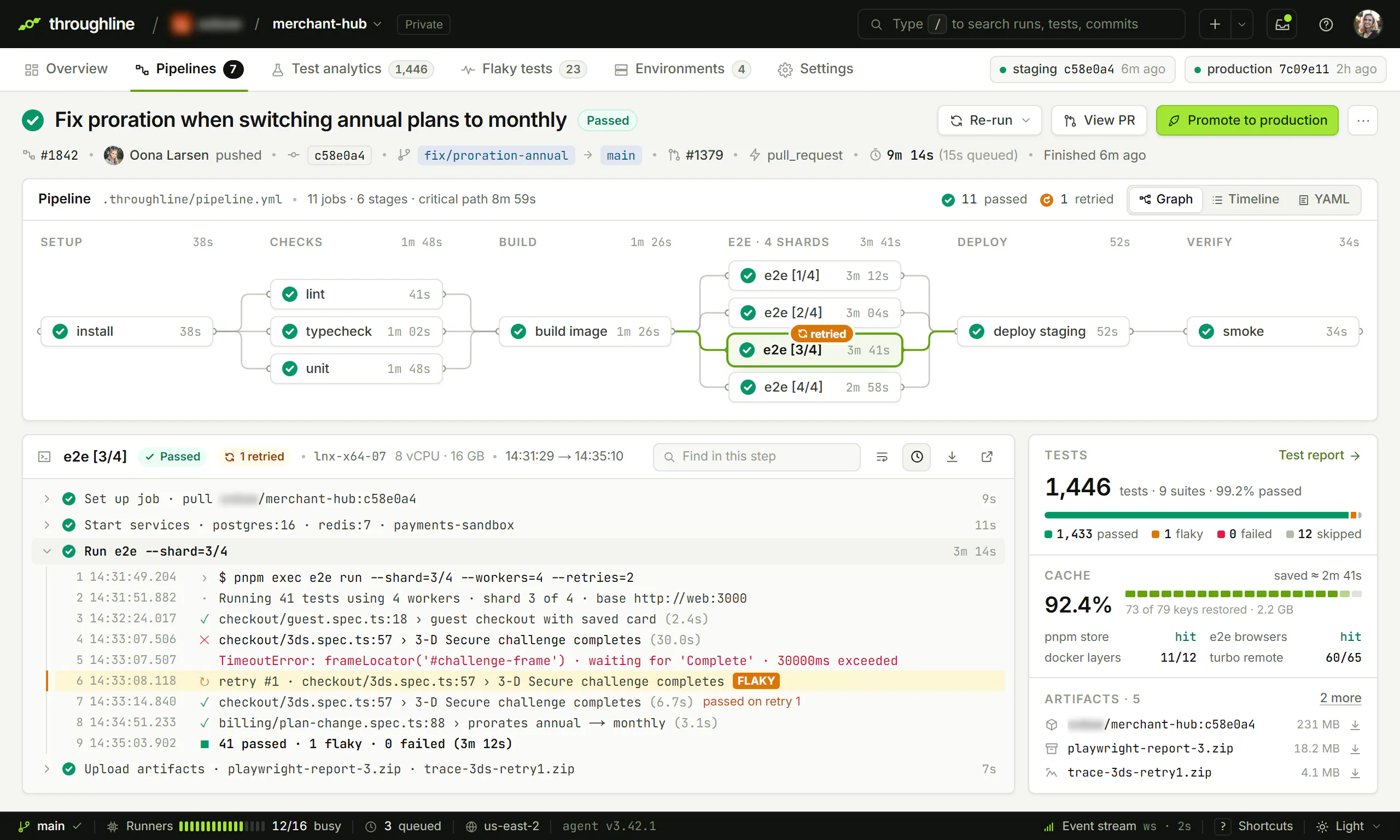
Pipeline run. Lint, typecheck, and unit tests run in parallel, the image that will ship is built once, then UI regression tests run across four shards against service containers before it deploys to staging. A flaky test is retried and flagged in the log.
Approach
- 01Added API integration tests for payments, orders, and subscriptions against real PostgreSQL and Redis containers.
- 02Introduced frontend regression coverage for the key merchant dashboard and checkout flows.
- 03Containerized the Node.js, Django, and React applications with Docker so every environment runs the same build.
- 04Introduced GitHub Actions pipelines that lint, test, build images, and deploy, with production promoted manually.
- 05Published test reports on every pull request so reviewers could see exactly what failed and why.
Key decisions
Test the money paths first
Checkout, payments, and webhooks got integration coverage before anything else, because those regressions cost the most.
Build once, promote the same image
Shipping the exact container that passed staging removed “works on staging” surprises.
Parallel jobs for fast feedback
Independent test suites run side by side, so pull requests get results while the change is still fresh.
Outcomes
- Regressions in checkout and payments are caught before review, not after release.
- Faster, repeatable releases through CI and containers.
- GitHub Actions
- Docker
- Node.js
- Django
- React
- TypeScript
- PostgreSQL
- Redis
Working on something similar?
I work with clients worldwide, across any time zone. Tell me what you're building.